
Making Climate Resiliency a Reality
With the changing landscape of federal funding availability, the City is working to identify innovative financing sources that will allow us to proactively reduce risks along our coastline before an extreme weather event hits, instead of relying on disaster relief like after Superstorm Sandy. To address this challenge, the City convened the Resilience Finance Task Force, made up of experts in policy, real estate, insurance and finance. The Task Force’s February 2025 report, Securing a Resilient City: Funding and Financing Shoreline Protection, recommended a diverse approach that included working to secure new sources of federal funding, leveraging local powers, and engaging insurance companies.
Project Cost
The estimated capital cost of the FiDi-Seaport Climate Resilience Plan is $5.5 billion in 2025 dollars. The earliest construction could begin is 2029, at which point, with escalation, the total project cost will be an estimated $8-9 billion. The cost is high—but the cost of inaction is even greater. Every additional year of delay contributes to millions of dollars in escalation costs due to inflation, changes in market conditions, and unforeseen events. This is why the City is advancing environmental review, which is required to secure the capital to begin construction.
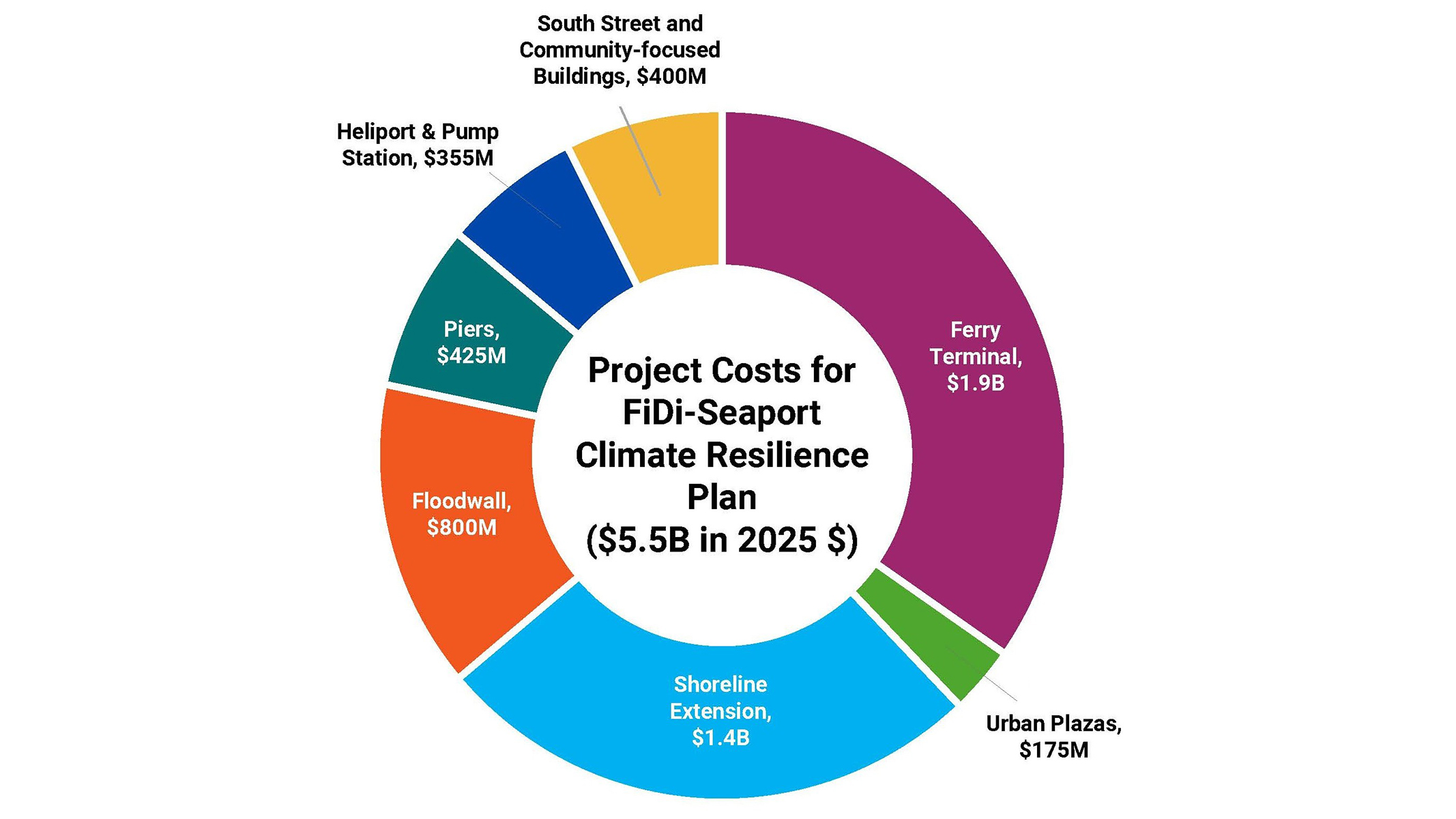
While the project is expensive, the benefits are great, and the cost of inaction is even greater.
Financing Design and Construction
The Master Plan identified that no single funding stream would be sufficient, and implementing this project will require partnership across City, State, and federal government. The US Army Corps of Engineers (USACE) Civil Works program is the largest source of federal resilience funding available for coastal cities and could provide up to 65 percent of design and construction costs.
The City has been working closely with USACE to follow the model established in their Alternative Delivery program, which utilizes existing authorities legislated by Congress in the Water Resources Development Act (WRDA) to allow states and cities to take a lead role in the feasibility, design, and construction of coastal storm risk-management projects. This allows the City to access federal funding and harness the technical support of USACE while ensuring that the project meets local needs.
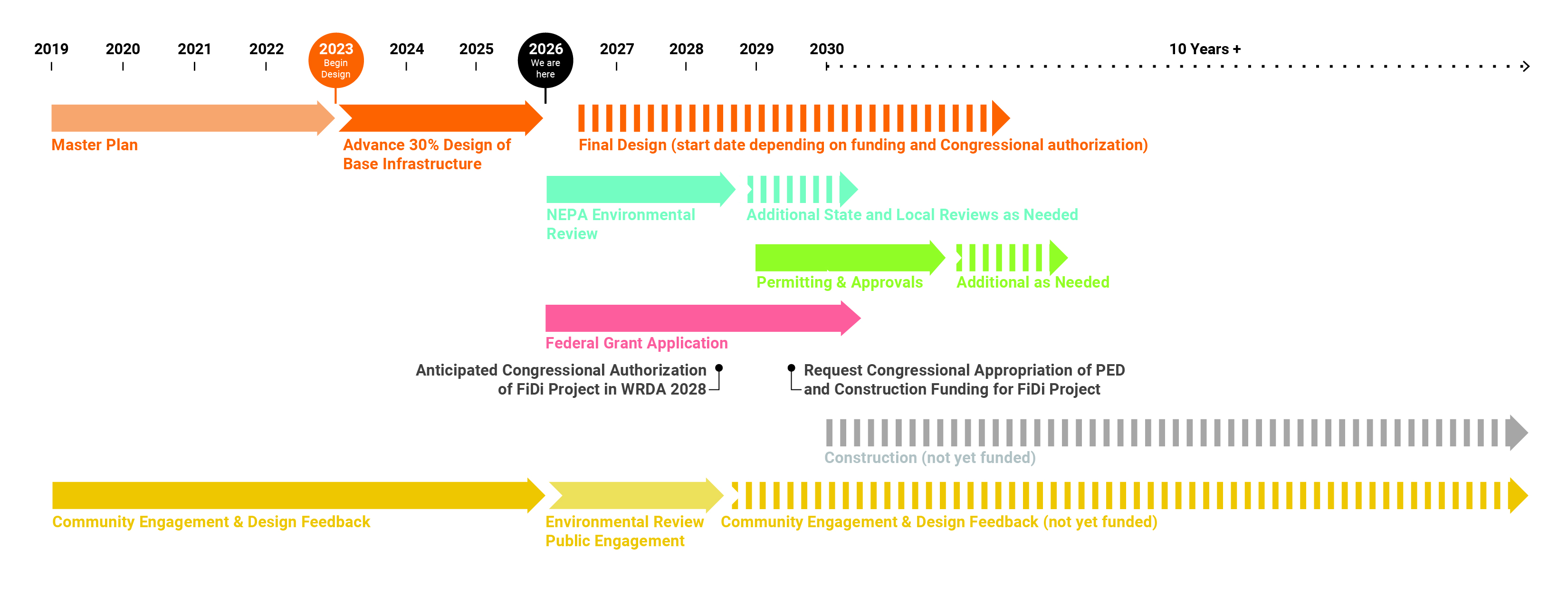
The City is now collaborating with USACE on an integrated feasibility report and environmental review study, which would allow the project to be authorized for construction and thereby eligible for USACE Civil Works congressional appropriations.
What’s Next
A project of this scale will take approximately a decade to construct. Before construction can begin, the project must secure required regulatory permits. The FiDi-Seaport Climate Resilience Plan will need to go through the environmental review process, which will assess the environmental impacts of the project, and obtain approvals from local, State, and federal regulatory agencies. The base infrastructure of the flood defense and footprint of the shoreline extension into the East River has reached a level of design that allows environmental review to begin. Advancing environmental review is a crucial step to implement the project and will allow the project to be eligible for larger funding sources through federal appropriations.
Closing the Funding Gap
Protecting New York City from flooding is critical to ensuring the city can serve all New Yorkers for generations to come. The FiDi-Seaport Climate Resilience Plan is one piece of the City’s strategy to achieve this, but the biggest barrier that remains is funding.
Local advocacy for funding—support from you—is crucial to building a coalition of support for a more resilient New York City.
Stay in the Know
Receive our emails with updates and event invitations.